.png) April 23, 2026
April 23, 2026
.png) Lina Encinias
Lina Encinias
.png)
As the world searches for cleaner and more reliable energy solutions, hydrogen is gaining attention as a promising fuel for power generation. From industrial facilities to critical infrastructure and backup power systems, the hydrogen-fueled generator is emerging as a technology capable of delivering efficient electricity with minimal environmental impact.
Unlike traditional generators that rely on diesel or natural gas, hydrogen-powered systems can generate electricity with little or no carbon emissions. Combined with increasing demand for low-emission energy technologies, hydrogen generators are quickly becoming an important part of the evolving energy landscape.
What Is a Hydrogen-Fueled Generator?
A hydrogen-fueled generator is a power-generation system that produces electricity using hydrogen gas as its primary fuel. Instead of burning fossil fuels, these generators convert hydrogen into electricity either by combustion in a hydrogen engine or by electrochemical reactions in fuel cells.
This technology differs significantly from conventional generators. Traditional generators rely on internal combustion engines powered by gasoline, diesel, or natural gas, which release carbon dioxide and other pollutants. A hydrogen-fueled combustion engine generator, by contrast, can produce electricity with water vapor as its primary byproduct.
Hydrogen fuel generator technology is gaining momentum as industries and governments look for ways to reduce greenhouse gas emissions while maintaining reliable power supplies. As hydrogen production methods evolve, these generators are expected to play an increasing role in both distributed energy systems and large-scale power infrastructure.
How Hydrogen Generators Work
To understand the value of hydrogen generators, it helps to examine how hydrogen is used in modern power systems. Hydrogen can act as both a fuel and an energy carrier, storing and delivering energy for multiple applications.
In a typical hydrogen generator system, hydrogen gas is stored in pressurized tanks and supplied to a power generation unit. In many industrial and power-generation applications, the preferred approach is the hydrogen internal combustion engine (H2 ICE).
Hydrogen combustion engines operate similarly to conventional internal combustion engines but use hydrogen as the primary fuel. Inside the engine, hydrogen mixes with air and is ignited in the combustion chamber. The resulting combustion drives the pistons and converts the fuel’s energy into mechanical power that can be used to generate electricity.
Because hydrogen contains no carbon, the combustion process primarily produces water vapor while significantly reducing carbon emissions compared with conventional fossil fuels. Hydrogen internal combustion engines also build on well-established engine technology, making them a practical and scalable solution for reliable power generation.
This approach enables hydrogen generators to deliver reliable energy while supporting the transition to lower-emission power systems.
Types of Hydrogen-Fueled Generators
Hydrogen generators come in several configurations depending on their intended use, power capacity, and deployment environment. These systems range from small portable units to large industrial installations designed for continuous power generation.
Portable hydrogen gas generators are designed for mobility and temporary power needs. These systems are often used in field operations, construction sites, and remote research facilities where clean and quiet energy sources are desirable. Their compact design allows them to be transported easily while still providing reliable electricity in locations where grid access may be limited.
Industrial hydrogen fuel generators operate at a much larger scale. These systems are commonly used in manufacturing plants, data centers, and critical infrastructure, where reliable power and reduced emissions are priorities. Industrial units are designed for continuous operation and can deliver high power output while leveraging hydrogen as a lower-emission fuel.
The differences between these systems largely relate to capacity, infrastructure requirements, and operational demands. Portable systems prioritize mobility and flexibility, while industrial hydrogen generators focus on durability, efficiency, and dependable long-term performance.
Benefits of Hydrogen-Fueled Generators
Hydrogen-powered generators offer several advantages compared with conventional fossil-fuel systems.
One of the most significant benefits is the potential for CO2-neutral emissions. When hydrogen is used in fuel cell generators, the only byproducts are water vapor and heat. This CO2-neutral power makes hydrogen fuel generators an attractive solution for organizations seeking to reduce environmental impact.
Hydrogen generators also offer higher efficiency than many traditional generators. They can deliver lower emissions and higher efficiency than conventional fossil-fuel systems. In hydrogen combustion engines, hydrogen replaces traditional fuels such as diesel or natural gas while producing significantly fewer carbon emissions.
Fuel cell systems offer another approach by converting hydrogen directly into electricity through electrochemical reactions. Both technologies demonstrate how hydrogen can support cleaner power generation across industrial energy systems.
Hydrogen Generator Market Growth and Adoption
Hydrogen generators are gaining increasing attention as industries look for reliable, lower-emission energy solutions. As global demand for cleaner power grows, hydrogen is emerging as an important energy carrier that can support power generation, transportation, and industrial operations.
Worldwide hydrogen demand continues to expand as more organizations explore hydrogen-based technologies. Many governments and energy providers are investing in hydrogen production, distribution, and storage infrastructure to support the transition to cleaner energy systems. These investments are helping accelerate the development of hydrogen-powered solutions across multiple sectors.
Advances in hydrogen production technologies are also improving the availability of low-emission hydrogen. As production methods scale and new technologies are introduced, the cost and accessibility of hydrogen are expected to improve further, making hydrogen-powered systems increasingly practical for commercial and industrial use.
Modern hydrogen systems are designed with advanced safety technologies, including monitoring sensors, ventilation systems, and pressure-controlled storage tanks. These engineering controls allow hydrogen generators to operate safely while delivering dependable power.
As infrastructure continues to expand and technology advances, hydrogen generators are becoming an increasingly viable option for organizations seeking dependable, cleaner energy solutions.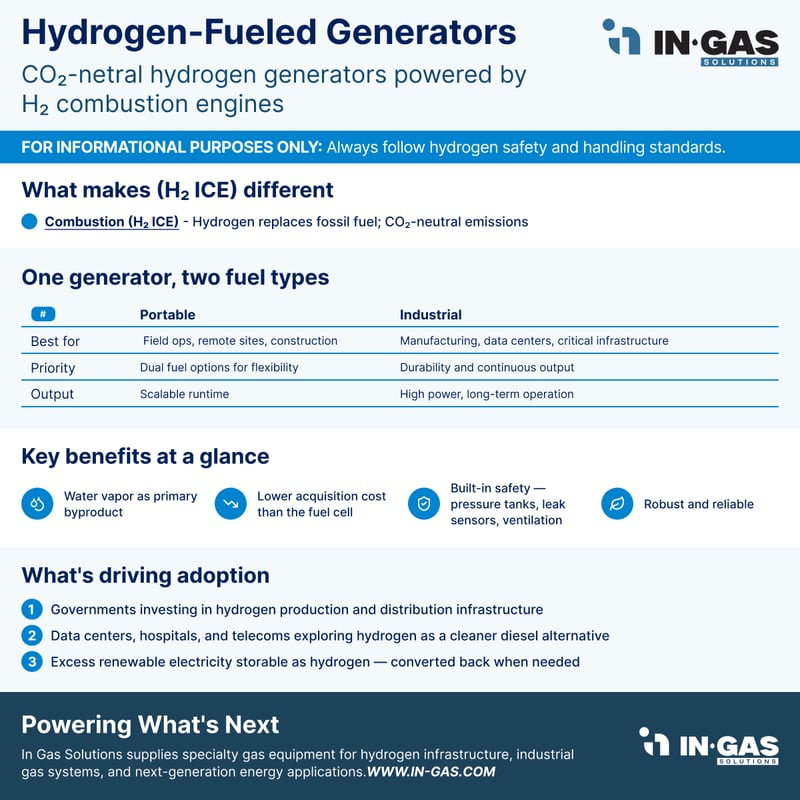
The Future of Hydrogen Generator Technology
Despite current challenges, the future of hydrogen generators appears promising. Governments, research institutions, and private companies are investing heavily in hydrogen infrastructure and clean energy technologies.
Hydrogen generators are expected to play a key role in the development of hydrogen economies, where hydrogen becomes a primary energy carrier across transportation, industry, and electricity generation.
Hydrogen generators are also becoming increasingly relevant in sectors that require reliable backup power. Data centers, hospitals, and telecommunications infrastructure are exploring hydrogen solutions as a cleaner alternative to diesel backup systems.
As renewable energy expands, hydrogen generators may also help address one of clean energy's biggest challenges: energy storage. Hydrogen produced during periods of excess renewable electricity can be stored and later converted back into electricity when needed.
Explore Equipment That Supports Hydrogen Power Systems
Hydrogen-powered generators represent an exciting step toward cleaner and more efficient power generation. As hydrogen production technologies improve and infrastructure expands, these generators are expected to become a key component of the global transition to sustainable energy.
Organizations exploring hydrogen technologies often require specialized systems for gas handling, storage, and processing. To support these applications, explore advanced Specialty Gas Equipment designed for industrial gas systems, hydrogen infrastructure, and next-generation energy solutions.

Lina Encinias
Lina Encinias holds a B.S. in Environmental Science with a minor in Mass Communications from the University of South Florida. Since joining DILO in 2017, she has combined her technical knowledge with her communication skills to support utilities and industries in safe, compliant, and sustainable gas management. Passionate about environmental stewardship, Lina is dedicated to advancing best practices that protect both people and the planet.